
Landscape Lighting Installation in Mechanicsburg, PA: Getting the Plan Right
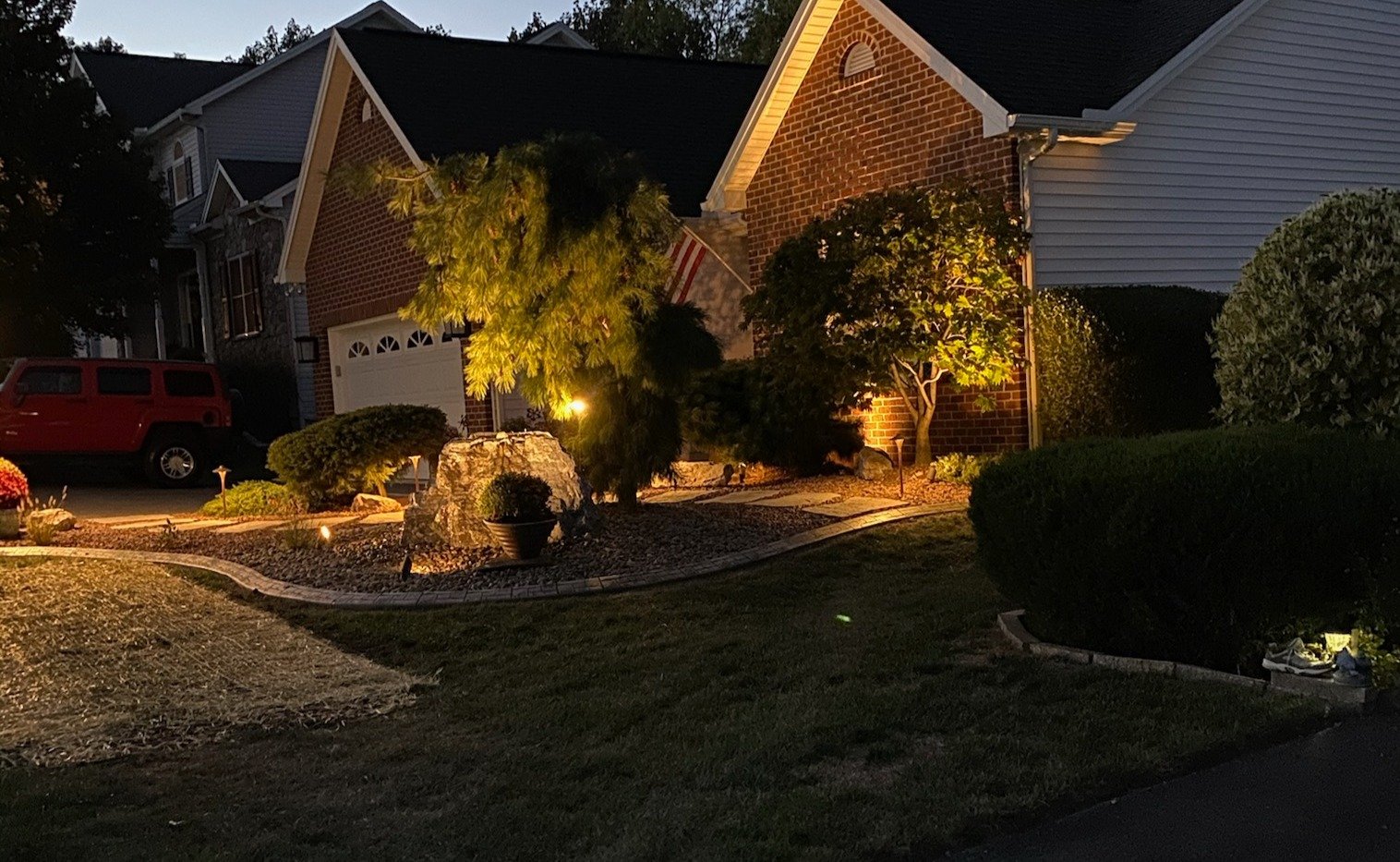
A yard that looks great at noon often goes completely flat the moment the sun sets, and that gap is exactly what landscape lighting installation in Mechanicsburg, PA, is supposed to close. Walkways disappear into shadow, mature trees lose all their shape, and a patio that felt inviting at dinner turns dark and unused an hour later. Most homeowners notice this after moving into a property, once they realize how little of their landscaping actually reads once the sun goes down.
Red Rock Landscape has been designing and building outdoor spaces around Mechanicsburg and Cumberland County since 2001, and the lighting installations that still look sharp years later share one thing in common: they were planned as a complete system before the first fixture ever got ordered.
A plan built fixture by fixture, added piecemeal over a few seasons, almost always ends up looking scattered instead of intentional, while a system designed around the whole property from the start reads as cohesive the moment it turns on.
Related: Hampden Township, PA: Enhance Your Night Sky Experience With Subtle Outdoor Lighting
What Goes Into A Landscape Lighting Installation?
Every system starts with a transformer sized to your total fixture load, since undersizing this single component dims fixtures at the far end of a run and shortens the life of bulbs and connections throughout the system. Getting transformer sizing right up front avoids having to swap it out later once more fixtures get added.
Wiring gets planned as a network, not fixture by fixture
Once the transformer's location and capacity are set, wire runs get mapped out across the property, buried at a safe depth through beds, along walkways, and to any tree or architectural feature getting highlighted. Treating this as one connected plan, rather than running a wire to each new fixture as it gets added over time, keeps the system organized and easier to troubleshoot down the road.
Fixtures go in last, and aiming happens after dark
Physical fixture installation wraps up the visible part of the project, but the real fine-tuning happens once the sun is down, when a contractor actually sees how each fixture reads against what it's lighting. A daytime-only installation often looks off once night actually falls, which is why a proper aiming pass after dark matters as much as the physical install itself.
How Do You Decide What To Highlight And What To Skip?
Not every tree, wall, or planting bed needs its own fixture, and a system that tries to light everything usually ends up flat and busy instead of layered and intentional. Walkways and steps come first for safety reasons, followed by architectural features like a stone facade or a specimen tree that genuinely earns the attention.
Safety lighting is the non-negotiable starting point
Steps, walkways, and driveway edges need enough light to navigate confidently after dark, particularly through Pennsylvania's shorter winter days when it's dark well before most people get home from work. This layer of lighting isn't optional the way accent lighting is, since it's what a family actually depends on every evening.
Focal points deserve more attention than background elements
A single well-lit specimen tree or an architectural stone wall creates more visual interest than lighting every shrub in the yard equally. Choosing two or three genuine focal points, rather than spreading light evenly across everything, produces a more considered, higher-end look.
What Fixtures Hold Up Best In Cumberland County Weather?
Brass and copper fixtures resist the corrosion that cheaper aluminum or plastic housings develop after a few Pennsylvania winters, and that difference shows up in reliability more than in appearance during year one.
LED fixtures have become the default choice across nearly every residential lighting project, using a fraction of the energy older halogen systems required while lasting considerably longer before needing replacement.
Sealed housings matter through freeze-thaw cycles
A well-sealed fixture keeps moisture out of the electrical connection point, which matters through a Cumberland County winter where fixtures sit through repeated freezing and thawing. Poorly sealed fixtures develop corrosion at these connections within just a few seasons, leading to flickering or fixtures that quit working entirely.
Consistent color temperature ties the whole system together
Warmer color temperatures read as traditional and inviting, while cooler temperatures feel more modern and architectural. Mixing the two across a property creates a patchwork look, so staying consistent across every fixture in the system produces a more cohesive final result.
How Does Lighting Get Wired And Powered?
Nearly all residential landscape lighting today runs on a low-voltage system, which costs less to operate, installs more safely, and allows for easier future expansion than line-voltage wiring tied directly into household current. A low-voltage transformer steps down standard household power to a level safe for buried, exposed wiring throughout a yard.
Smart controls add convenience without added wiring complexity
Many systems now pair with a smart transformer that lets homeowners adjust timing and brightness from a phone app rather than a physical switch at the equipment pad. This matters through Pennsylvania's shifting seasonal daylight, since app-based scheduling adjusts automatically for sunset time instead of requiring manual timer resets every few weeks.
Sizing in extra transformer capacity pays off later
A transformer sized exactly to your current fixture count leaves no room to expand the system without an equipment upgrade. Building in some spare capacity from the start costs little at installation and saves a bigger expense if you decide to add fixtures down the road.
What Does Landscape Lighting Cost In Mechanicsburg?
Cost depends on total fixture count, wire run length, transformer size, and whether the project includes smart controls. A basic walkway-and-entry package for a modest property sits toward the lower end of the range, while a full-property system with tree uplighting, accent features, and app-based controls runs meaningfully higher.
Site visits produce far more accurate numbers than general estimates
National average pricing for landscape lighting varies widely and says very little about your specific property, tree placement, or the architectural features worth highlighting. A quote based on an actual evening walk-through of your yard, when lighting effects are easiest to visualize, is the only number worth building a budget around.
Phasing lets you spread cost without redoing wiring later
Installing the full wiring infrastructure sized for your complete design, then adding fixtures over time as budget allows, avoids the higher cost of retrenching for wiring added later. This approach lets a lighting plan grow into its full design gradually rather than all at once.
Related: Enhance Your Southampton Township PA, Home With Outdoor Lighting and Plantings
How long does a lighting installation take?
Most residential projects around Mechanicsburg wrap in one to three days depending on property size and total fixture count. A basic walkway-and-entry package for a typical yard often finishes in a single day, while a full-property system with extensive tree uplighting and multiple zones takes longer to trench, wire, and properly aim.
Trenching time depends heavily on what's already in the ground
Wire runs crossing existing hardscape, mature root systems, or irrigation lines take longer to install carefully than a run through open lawn or planting beds. Mapping out where irrigation lines and major roots sit before digging prevents accidental damage partway through the project.
A dedicated evening visit finishes the job right
Because fixture aiming needs real darkness to evaluate properly, most projects include a separate evening visit after the daytime installation wraps. Skipping this step is the most common reason a lighting system looks technically installed but visually unfinished.

How Do You Maintain Landscape Lighting Through Pennsylvania Seasons?
A well-installed system needs relatively little ongoing attention, but a few seasonal checks keep it performing the way it did on installation day. Fixtures near walkways or driveways benefit from a spring check after winter, confirming none were damaged by snow removal equipment, road salt exposure, or ground shifting from freeze-thaw cycles.
Standardized components make repairs simple
Quality LED fixtures last for years before needing replacement, but when a bulb or module eventually fails, a system built with accessible, standardized components makes the fix quick. Systems built around proprietary or hard-to-source parts turn a minor repair into a bigger, more expensive hassle.
Seasonal timer adjustments keep the system in sync
Pennsylvania's daylight hours shift substantially between summer and winter, and a timer or photocell system set once and left alone drifts out of sync with actual sunset times over the course of a year. A quick seasonal check keeps lights turning on and off when you actually want them to.
How Does Lighting Fit With The Rest Of Your Landscape Design?
Lighting works best when it's planned alongside the rest of a property's hardscape and plantings rather than added afterward as a separate project. Wire runs follow the same trenches used for irrigation lines or paver edging, and fixture placement accounts for how a retaining wall, patio, or planting bed will actually be used once construction wraps up.
Retaining walls and steps benefit from grazing techniques
Textured stone surfaces read as considerably more dimensional when lit with a grazing technique, light angled close to the surface to emphasize texture, compared to a flat wash from a distance. Deciding which lighting technique suits which hardscape feature is part of a thoughtful design rather than an afterthought applied once everything else is finished.
Coordinating with a broader project saves cost and disruption
Homeowners planning a patio, retaining wall, or major planting bed alongside a lighting system often save money by having wiring installed during that same construction phase, rather than trenching separately through finished hardscape or established plantings later.
What Should You Ask Before Choosing A Landscape Lighting Contractor?
Not every contractor who installs a few path lights handles a full system with the same attention to transformer sizing, wire planning, and fixture aiming. Ask to see photos of completed lighting projects specifically, not just daytime shots of patios or plantings, and ask how the contractor handles the after-dark aiming visit that separates a designed system from an installed one.
Ask how the contractor sizes transformers for future growth
A contractor who asks about your long-term plans for the property, not just what you want lit today, sizes transformer capacity with room to expand later. One who quotes based only on your current fixture count often leaves you without an easy path to add fixtures down the road without upgrading equipment.
Ask about warranty coverage on fixtures versus workmanship
Fixture and bulb warranties typically come from the manufacturer, while the labor and wiring behind the installation falls under the contractor's own workmanship guarantee. Understanding which warranty covers what, and for how long, before signing a contract avoids confusion if a fixture or connection needs service later.
Ready to Light Up Your Property?
Every property calls for a different lighting plan depending on layout, architecture, and how you actually use the space after dark.
Red Rock Landscape will walk your property, often at dusk to show real placement and effect, and design a system built to look intentional for years.
Schedule a Landscape Lighting Consultation with Red Rock Landscape to get started.
Frequently Asked Questions
How do you decide what to highlight with landscape lighting and what to skip?
A good lighting plan lights two or three genuine focal points, like a specimen tree or a stone facade, rather than spreading fixtures evenly across every shrub and wall on the property. Walkways and steps come first for safety reasons, since that's the lighting a family actually depends on every evening, before any accent lighting gets added. Trying to light everything usually produces a flat, busy result instead of a layered one. Choosing a few features that genuinely earn the attention creates a more considered, higher-end look.
Why does a lighting installation need a separate evening visit?
Fixture aiming needs real darkness to evaluate properly, since a fixture that looks right in daylight often reads completely differently once it's actually doing its job at night. Most projects include a dedicated evening visit after the daytime installation wraps, specifically for this fine-tuning. Skipping this step is the most common reason a system looks technically installed but visually unfinished. Red Rock Landscape builds this visit into every Mechanicsburg-area project as a standard part of the process.
What's the difference between low-voltage and line-voltage landscape lighting?
Low-voltage systems are the standard for nearly all residential landscape lighting, since they cost less to operate, install more safely, and allow for easier future expansion than line-voltage wiring tied directly into household current. A low-voltage transformer steps down standard household power to a level safe for buried, exposed wiring throughout a yard. Expanding a low-voltage system later is a straightforward addition once the transformer has capacity. Line-voltage wiring, by contrast, requires an electrician for any future modification.
How much does landscape lighting installation cost in Mechanicsburg?
Cost depends on total fixture count, wire run length, transformer size, and whether the project includes smart controls. A basic walkway-and-entry package for a modest property sits toward the lower end of the range, while a full-property system with tree uplighting, accent features, and app-based controls runs meaningfully higher. Some homeowners manage the budget by installing the full wiring infrastructure up front and adding fixtures over time as budget allows. A quote based on an actual evening walk-through of the property produces a far more accurate number than national average pricing.
How do you maintain landscape lighting through Pennsylvania winters?
A well-installed system needs relatively little ongoing attention, but fixtures near walkways or driveways benefit from a spring check confirming none were damaged by snow removal equipment, road salt, or ground shifting from freeze-thaw cycles. Sealed fixture housings keep moisture out of electrical connections through repeated winter freezing and thawing, which matters more for long-term reliability than for how a fixture looks in its first year. Timer and photocell settings also drift out of sync with actual sunset times as daylight hours shift between seasons, so a quick seasonal check keeps lights on schedule. Standardized, accessible components make any eventual repair simple rather than a bigger hassle.
Related: Illuminate Your Entryway: Outdoor Lighting for Your Paver Driveway in Middlesex Township, PA
About the Author
Dave is the owner and founder of Red Rock Landscape, Inc., a full-service landscaping company based in Mechanicsburg, PA. Since founding the company in 2001, Dave has built Red Rock into a trusted name for landscape design, hardscaping, curbing, and lawn care across Cumberland County. As an ICPI certified installer, Tech Pro Contractor, and certified SRW installer, he brings hands-on expertise to every project.